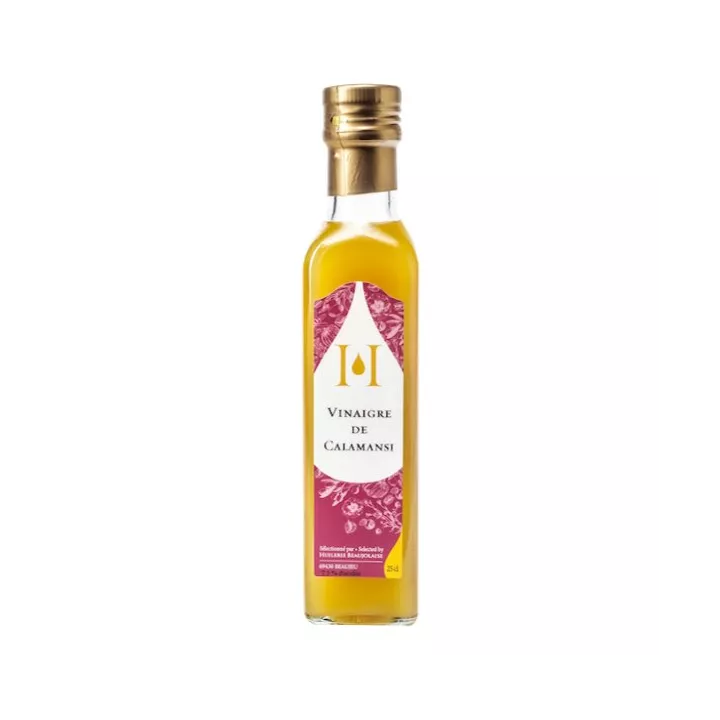
The calamansi pulp has a tangy flavor, similar to passion fruit and grapefruit, with a slight bitterness. Its peel, on the other hand, has a pleasant aroma and a sweet flavor reminiscent of kumquat (a Japanese citrus fruit). Calamansi oil, with its harmonious blend of flavors, tastes, and aromas, is widely used in cooking to add an exotic touch to dishes, sauces, marinades, and desserts.
What is calamansi?
The calamansi is a small, very round citrus fruit native to Southeast Asia. Smaller than a lime, the calamansi is packed with health and wellness benefits. Widely used in Filipino cuisine, its slightly bitter taste and complex flavors are reminiscent of mandarin, lime, and pink grapefruit. A hybrid of the kumquat and the mandarin orange, the calamansi is primarily eaten when young and green. As it ripens, its color turns orange, resembling that of a clementine.
The production of calamansi vinegar at the Huilerie Beaujolaise
To make calamansi vinegar, the fruits are harvested at full maturity, then combined with vinegar before being sweetened with cane sugar to encourage fermentation of the fruit juice. This fruit juice fermentation process involves two stages: first, alcoholic fermentation where the yeasts naturally present in the juice transform the sugar into alcohol, thus turning the juice into wine. Then, the natural bacteria present in this fruit wine convert the alcohol into vinegar, without undergoing pasteurization. The resulting vinegar is then filtered before being bottled.
How to use calamansi vinegar in cooking?
Calamansi vinegar is the exotic equivalent of lemon juice, but with an intensity that makes it unique. Use it to enhance your raw vegetable salads, adding a tangy freshness. Incorporate it into your tabbouleh for an exotic touch, or to accentuate the flavor of your hot or cold fish and shellfish dishes. It is also widely used in baking, delicately flavoring your desserts. It is recommended to keep it refrigerated and shake it before use.
Some suggestions for using camelina oil
- - Chicken strips with calamansi vinegar: Slice your chicken into small strips and place them in a bowl. Separately, mix 8 tablespoons of calamansi vinegar, salt, and pepper. Cover with plastic wrap and let marinate for 30 minutes. Heat olive oil in a pan, then add the marinade along with the chicken pieces. Serve hot with raw vegetables such as grated carrots;
- - Calamansi Vinegar Mousse: Soak the gelatin in cold water. Pour 2 tablespoons of calamansi vinegar into a blender, add the sugar, and mix. Off the heat, melt the drained gelatin in the mixture, stirring until dissolved. Beat the egg whites with a pinch of salt until stiff peaks form. Gently fold the gelatin mixture into the beaten egg whites. Divide the mousse among 4 tall glasses. Chill for at least 3 hours.
- - Sea bream carpaccio: Start by blanching your watercress in boiling water. Chop your basil leaves, squeeze a lime, and crush everything in a mortar with olive oil. Press the watercress and your mixture through a fine-mesh sieve to extract the juice. Toast hazelnuts in a small pan, then slice your sea bream fillets. Arrange them on a plate with the green olive oil, drizzle with a generous amount of calamansi vinegar, and then add the toasted hazelnuts.
250 ml

 Boo!
Boo!